Network
Addresses use RFC 5737 documentation ranges and generic role names - they show the structure, not the real allocations.
Segments
Trust is split across segments that match how exposed each is.
| Segment | Example range | Holds | Trust |
|---|---|---|---|
| Management LAN | 192.0.2.0/24 |
Core server, workstation, laptops, and the VMs (bridged) | Highest (wired, local) |
| VPN clients | 198.51.100.0/24 |
Authenticated remote devices | Medium (remote, authed) |
| Docker bridges | 203.0.113.0/24 |
Per-tier isolated container networks on the core server | Scoped per tier |
Docker bridges are isolated per platform tier rather than sharing one flat network, so a container in the app tier cannot reach the Git/CI tier laterally.
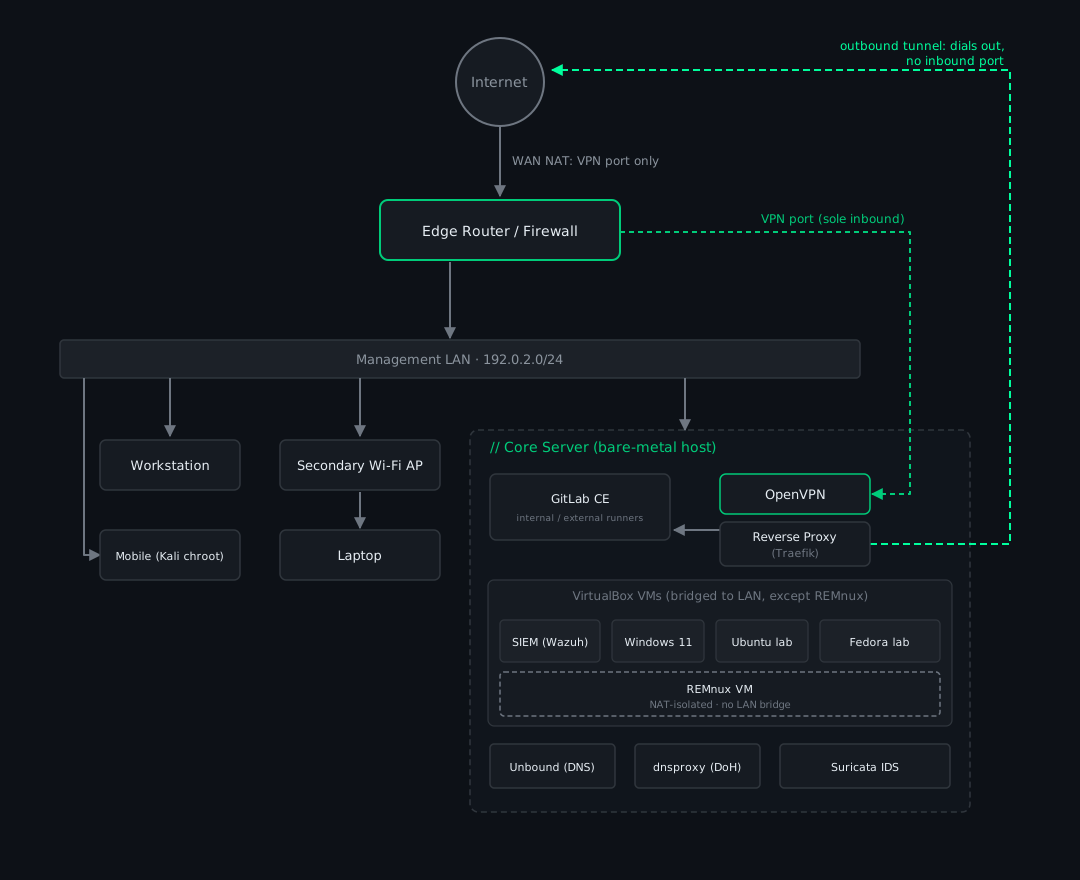
Why it's shaped this way
Nothing inbound - by rule, from day one. "Nothing inbound" was a design rule before it was ever an implementation. The usual advice is to forward a port and firewall it down; my answer is, why not just leave port 22 open to the internet while you are at it? A forwarded-and-hardened port is still a port on the public internet waiting to be wrong. The whole shape of the network falls out of refusing that - one VPN port in, and public services that dial out over a tunnel instead of opening anything.
Self-hosted DNS, on purpose. The easy path is to point everything at the
router or at 1.1.1.1 and forget it. I run my own resolver for two reasons:
learning (DNS is foundational, and you only understand it by operating it), and
not handing my ISP a log of everywhere I go - which is what the DoH layer is for.
At a glance
- Ingress: one inbound port (the VPN); everything public reaches the world through an outbound-only tunnel, so there is zero inbound surface.
- TLS: a single wildcard certificate, auto-renewed with a DNS-01 challenge and fanned out to every consumer - no per-service ACME client.
- DNS: self-hosted Unbound (recursive, blocklisting) with a DoH frontend, pinned to loopback aliases so resolution survives reboots and link changes.
- Resilience: if the core's resolver goes down, the edge router automatically fails LAN DNS over to public resolvers and reverts when it recovers - so the LAN keeps internet even with the core offline.
- Monitoring: host, network, and perimeter telemetry all fan into the SIEM.
Full mechanics - ingress paths, cert fan-out, egress control, DNS layers, and the gotchas →